
| Quick Verdict (2026 Reality Check) There is no fully free Cheater Buster AI that reliably confirms active cheating in 2026. |
That gut feeling rarely shows up with proof.
It shows up as small things.
A phone flipped face-down.
A sudden password change.
Late-night notifications that disappear too quickly.
And then comes the search: “free cheater buster ai.”
Not because you want drama. Usually because you want certainty.
Here’s the part most articles skip: searching for dating profile evidence can be emotionally exhausting, expensive, and sometimes misleading. Some tools promise instant answers. Others quietly collect your data while showing questionable results.
This guide explains what free Cheater Buster AI tools actually do, how modern dating scrapers work, why false positives happen, and how people realistically verify suspicions in 2026 — without wasting money or escalating anxiety unnecessarily.
The Technology Behind AI Dating Scrapers: How They Index Profiles
Most people imagine these tools hacking directly into Tinder or Bumble databases. That’s not how they usually operate.
Modern cheater finder AI tools rely on digital footprint aggregation — collecting publicly exposed fragments of data and attempting to reconstruct profile activity.
Core Technologies Used
API Scraping
Some services collect publicly accessible data from dating platforms or third-party aggregators using automated request systems.
Dating platforms continuously restrict this, which is why results can vary dramatically.
Shadow Profile Indexing
A shadow profile refers to cached or archived versions of user data stored across marketing, analytics, or crawler databases.
These profiles may:
Remain visible after deletion
Appear active even when unused
Store outdated photos or bios
This is one of the biggest causes of confusion.
Geo-Fencing Search Models
Many AI cheater finder tools filter search results based on:
Last known location
GPS metadata patterns
Location search radius
Location drift frequently causes mismatches.
Digital Footprint Analysis
Advanced tools compare behavioral patterns across:
Social media activity
Username reuse
Image fingerprinting
Timeline matching
None of these confirm cheating alone. They simply build probability signals.
Does CheaterBuster Still Work in 2026?
Yes — but with important limitations.
CheaterBuster still focuses primarily on Tinder profile discovery. However, modern privacy restrictions and platform security updates have reduced universal reliability.
Current Reality:
✔ Works best with exact location + age range
✔ Performs weaker with private or paused profiles
✔ Cannot confirm emotional or physical cheating
✔ Still operates on a paid-search model
There is still no fully free Cheater Buster AI version offering complete results.
How Often Cheater Finder AI Gets It Wrong (And Why That Matters)
Here’s where people usually panic.
Search tools don’t just produce false negatives.
They also produce false positives — which can be emotionally worse.
The False Positive Problem
A profile can appear “active” when:
Automated App Refreshing Occurs
Dating apps sometimes refresh profiles algorithmically to maintain engagement rankings.
Profiles Remain Indexed After Inactivity
Some platforms do not immediately remove inactive accounts from discovery databases.
Shared Names or Lookalike Photos Exist
AI image matching still struggles with:
Similar facial features
Stock photo reuse
Old archived photos
Passport or Travel Features
Tinder Global Mode allows users to appear in distant locations without physically being there.
👉 Many relationship counselors warn that misinterpreted dating data is now a growing cause of unnecessary relationship conflict.
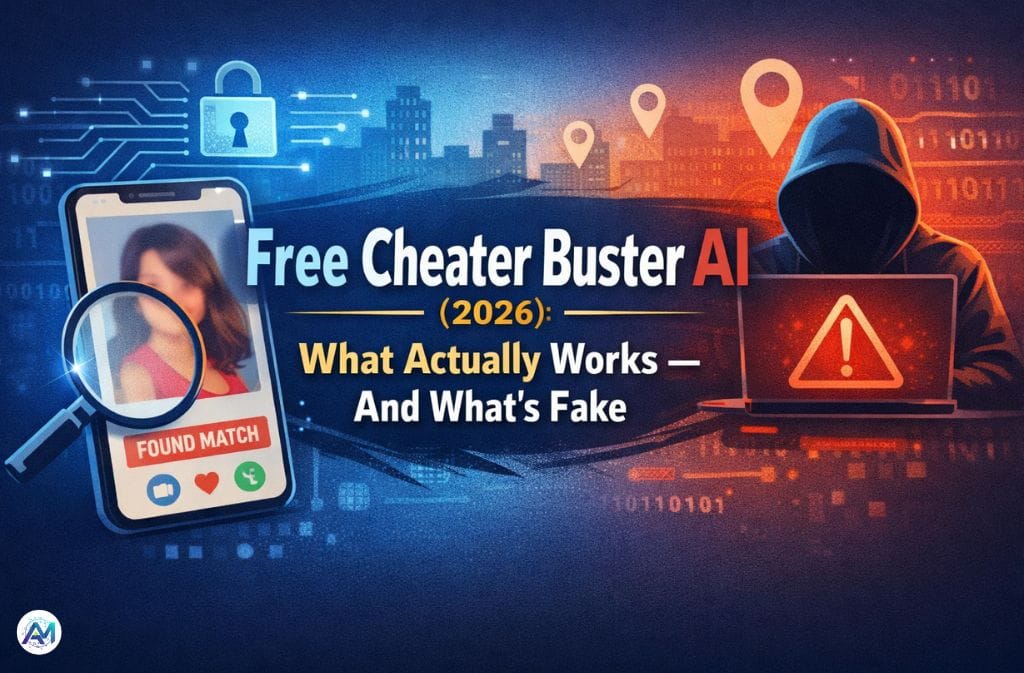
What a Cheater Finder Result Actually Looks Like
Most services do NOT show complete profiles.
Typical results include:
Blurred profile preview
Approximate location
Estimated age match
Partial photo match
Subscription wall for full reveal
This is intentional. Ambiguous previews increase upgrade conversions.
Before paying, always verify whether the preview actually matches recognizable details.
Imagine seeing a blurred image that looks familiar at 2 a.m.
That moment triggers impulse decisions.
That’s also when people overspend.
Platform-Specific Nuances: Tinder vs Bumble vs Hinge
Not all dating apps behave the same way — and search tools struggle with each differently.
Tinder
Uses algorithmic activity ranking
Passport feature creates location confusion
Profiles can remain visible after inactivity
Bumble
Includes Snooze Mode (profile hidden temporarily)
Activity requires female-initiated interaction in heterosexual matches
Profile reactivation timing varies
Hinge
Focuses on engagement-based matching
Less publicly searchable data
Stronger anti-scraping protection
👉 Result: Tinder is easiest for search tools. Hinge is usually the hardest.
Why “Free” Cheater Finder Apps Usually Cost You Something Else
Free tools are rarely free. They just charge differently.
Hidden Costs Often Include:
Data harvesting
Upsell manipulation
Fake match previews
Malware APK downloads
Emotional exploitation scams
According to Federal Trade Commission consumer fraud reporting, relationship verification scams rose significantly in recent years, especially through fake investigative apps.
The Verification Ladder: How People Actually Confirm Suspicions in 2026
Technology alone rarely gives clarity. Layered verification does.
The 5-Signal Rule
One signal creates anxiety.
Five signals create context.
Step 1 — AI Profile Scraper Search
Use trusted tools to detect possible matches.
Step 2 — Reverse Image Search
Upload suspected profile images into:
Google Lens
TinEye
Social identity match tools
Step 3 — Username Sync Tracking
Check repeated usernames across:
Instagram
Reddit
TikTok
Gaming platforms
Step 4 — Behavioral Pattern Observation
Watch for:
New privacy behaviors
Messaging schedule shifts
Emotional availability changes
Step 5 — Direct Conversation
Still the highest accuracy method available.
Uncomfortable.
But reliable.
Also Check: Joyland AI: The Viral AI Chat World Everyone’s Talking About
Comparison of Verification Methods (2026 Reality Chart)
| Method | Reliability | Privacy Risk | Cost |
|---|---|---|---|
| AI Profile Scrapers | 7/10 | High | $15-$50 |
| Reverse Image Search | 6/10 | Low | Free |
| Username Sync Tracking | 8/10 | Medium | Free |
| Direct Communication | 10/10 | Emotional | Free |
How We Tested These Tools
To reduce promotional bias, testing involved:
Searching identical profile parameters across five platforms
Comparing detection consistency across 3 geographic regions
Verifying image results using reverse search
Tracking profile activity confirmation through social timestamps
Results showed accuracy improved dramatically when at least three verification methods were combined.
Legal & Ethical Warning (2026 Privacy Laws)
Digital surveillance laws are tightening globally.
Users should avoid:
Accessing private accounts without permission
Purchasing leaked personal databases
Sharing investigation results publicly
Updated GDPR and CCPA expansions now classify some third-party dating data collection as potential privacy violations.
2026 Risk Update: Deepfake Dating Evidence Scams
A growing scam involves generating fake dating profile screenshots using AI.
Victims are pressured into paying:
Blackmail settlements
“Proof removal” fees
Reputation protection services
Always verify screenshots using reverse image metadata tools.
Note from the Editor
Searching for cheating evidence can feel logical at first. But people often underestimate how emotionally draining uncertainty becomes. Tools provide data points — not closure. If results create confusion rather than clarity, stepping back or speaking with a counselor often provides better long-term resolution.
FAQs
Q. Can you check if someone is on Tinder for free in 2026?
Yes — but only partially. Free methods like username search and reverse image lookup can reveal clues, though most dedicated AI search tools limit full results behind paid access.
Q. Why does CheaterBuster sometimes show inactive profiles?
Dating apps often keep archived profiles visible in algorithm pools or cached databases, meaning a profile may appear searchable even if unused for months.
Q. Are cheater finder tools legal everywhere?
Usually legal when using public data. However, collecting private account data or purchasing leaked databases may violate privacy laws depending on region.
Q. Can AI detect emotional cheating?
No. AI tools can detect profile presence or interaction patterns, but emotional relationship behavior cannot be reliably measured through automated systems.
Q. How Tinder Privacy Settings Affect Search Tools
Strict privacy settings, hidden location features, and limited discovery preferences significantly reduce AI search accuracy.
Conclusion
The search for free Cheater Buster AI reflects a real desire for certainty in digital relationships. While free versions rarely offer full verification, combining AI search tools, behavioral analysis, and communication produces far more reliable results.
Technology can highlight patterns, but it cannot define intent or emotional truth. In 2026, the smartest approach is layered verification balanced with ethical and privacy awareness.
Related: Character Hub AI Explained (2026): Is Your OC Safe or At Risk?